
Call us now :07315122648
 Send Inquiry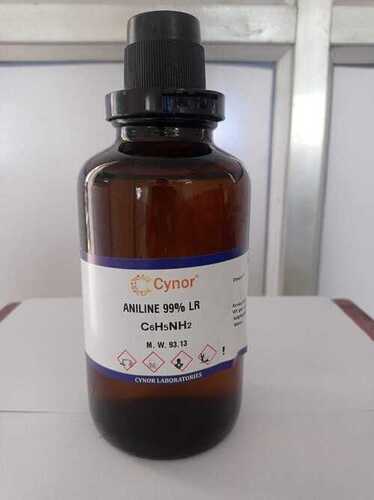
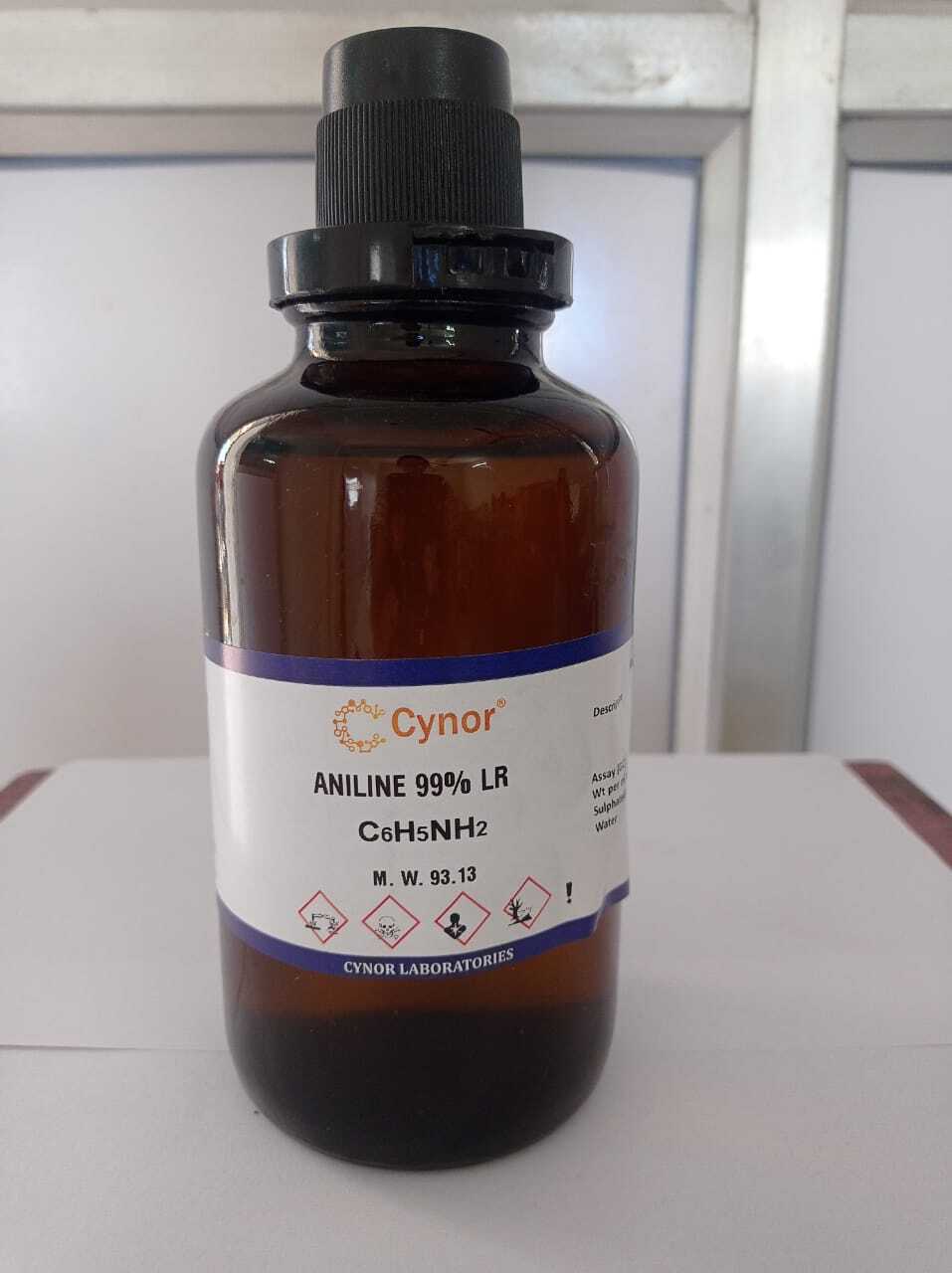
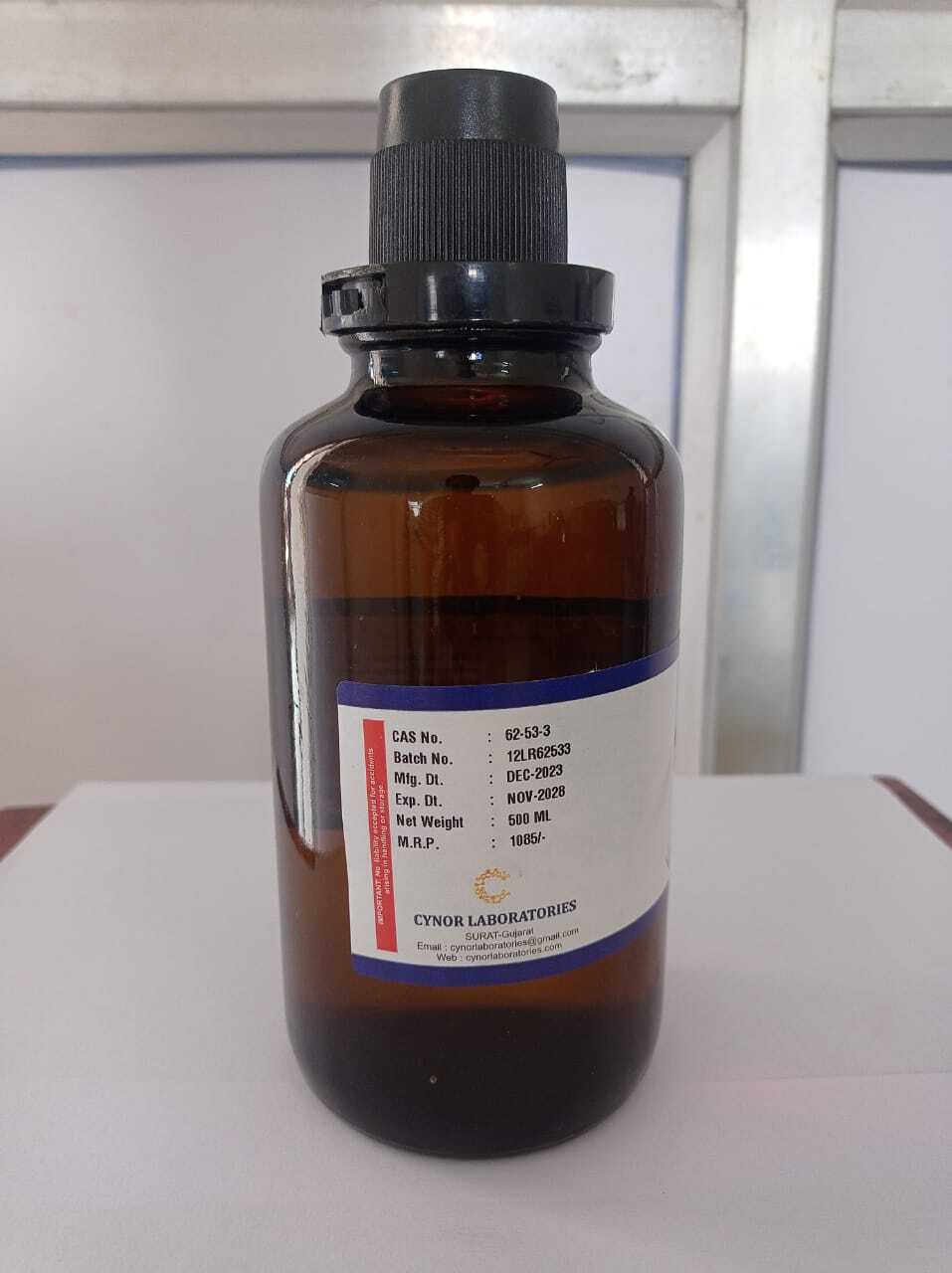
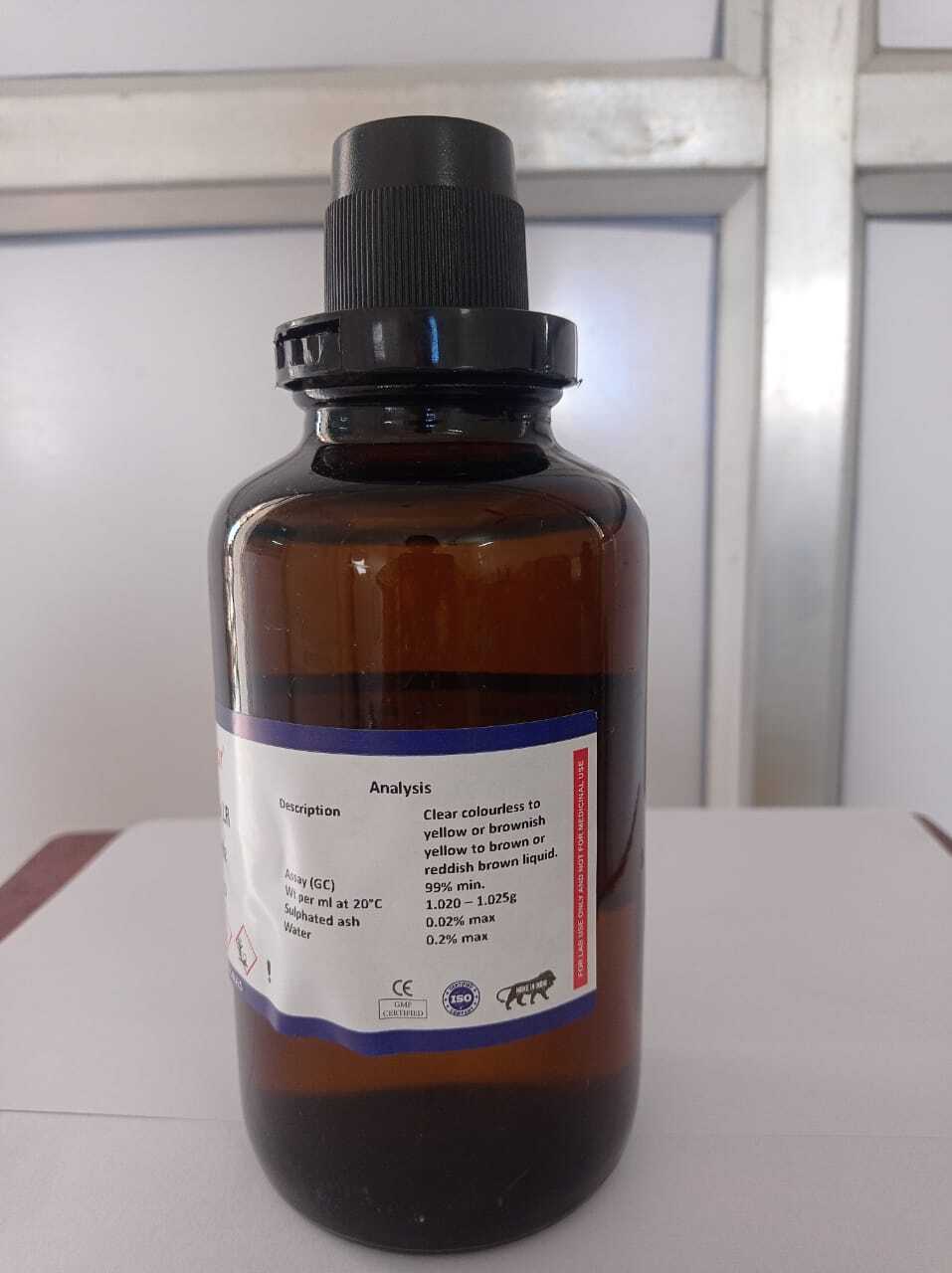
ANILINE 99% LR (500 ML )
1085 INR/Bottle
Product Details:
- Shelf Life 36 months
- Appearance Clear liquid
- Other Names Phenylamine, Aminobenzene
- Structural Formula C6H5NH2
- Molecular Formula C6H7N
- Poisonous Toxic
- Smell Characteristic, aromatic
- Click to View more
X
ANILINE 99% LR (500 ML ) Price And Quantity
- 1085 INR/Bottle
- 1 Bottle
ANILINE 99% LR (500 ML ) Product Specifications
- 62-53-3
- 184 °C
- Aniline
- 99%
- 93.13 g/mol
- Liquid
- For analytical and research purposes only
- Chemical synthesis, Pharmaceuticals, Dyes, Laboratory reagent
- Store in a cool, dry, well-ventilated area away from direct sunlight
- Laboratory Reagent (LR)
- 29214100
- Phenylamine, Aminobenzene
- Aromatic Amine
- C6H5NH2
- 200-539-3
- Laboratory Reagent (LR)
- Clear liquid
- 36 months
- Toxic
- Characteristic, aromatic
- Liquid
- 1.02 Gram per cubic centimeter(g/cm3)
- -6 °C
- Colorless to slightly yellow
- C6H7N
- 1547
- 70 °C
- 615 °C
- In case of contact, rinse with plenty of water and seek medical advice
- 500 ML amber glass bottle
- H301, H311, H331, H351 (Toxic if swallowed, skin contact, inhaled; suspected of causing cancer)
- 200-539-3
- 1.586
- Miscible with ethanol and ether; slightly soluble in water
- 0.6 mmHg at 25 °C
- Stable under recommended storage conditions
- As per manufacturer label
Product Description
Aniline (from Portuguese anil 'indigo shrub', and -ine indicating a derived substance)[6] is an organic compound with the formula C6H5NH2. Consisting of a phenyl group (C6H5) attached to an amino group (NH2), aniline is the simplest aromatic amine. It is an industrially significant commodity chemical, as well as a versatile starting material for fine chemical synthesis. Its main use is in the manufacture of precursors to polyurethane, dyes, and other industrial chemicals. Like most volatile amines, it has the odor of rotten fish. It ignites readily, burning with a smoky flame characteristic of aromatic compounds.[7] It is toxic to humans.
Essential Laboratory Reagent
Aniline 99% LR is a staple in research and industrial laboratories, recognized for its high purity and reliability. Its versatility finds applications in the synthesis of pharmaceuticals, organic compounds, dyes, and as a critical laboratory reagent. The product's clear liquid form and characteristic aromatic smell underscore its purity and quality, making it suitable for precise scientific analyses.
Safety Precautions and Handling
Due to its toxic nature, aniline requires diligent handling. Always use appropriate personal protective equipment and operate in a well-ventilated area. If contact occurs, promptly rinse with plenty of water and seek medical assistance. Store the bottle in a cool, dry, and ventilated space, away from direct sunlight, to ensure product stability and user safety.
FAQ's of ANILINE 99% LR (500 ML ):
Q: How should ANILINE 99% LR be stored for maximum shelf life?
A: Store the aniline in a cool, dry, well-ventilated area away from direct sunlight. Proper storage will ensure product stability and maintain its 36-month shelf life.Q: What are the main applications of ANILINE 99% LR in laboratory settings?
A: Aniline 99% LR is primarily used in chemical synthesis, pharmaceuticals, dye production, and as a laboratory reagent for analytical and research purposes.Q: What safety precautions should be observed when handling ANILINE 99% LR?
A: Since aniline is toxic (H301, H311, H331, H351), always use gloves, eye protection, and work in a fume hood or ventilated area. Avoid skin contact, inhalation, and ingestion. In case of exposure, rinse thoroughly with water and seek medical advice.Q: Where does ANILINE 99% LR show optimal solubility, and how does this affect its use?
A: Aniline is miscible with ethanol and ether but only slightly soluble in water. This enables its application in organic synthesis and solvent systems where high solubility is required.Q: What is the process for disposing of ANILINE 99% LR after use?
A: Dispose of aniline waste according to local hazardous chemical regulations. Do not pour it down drains; use approved chemical waste disposal containers handled by certified professionals.Q: When is it necessary to refer to the manufacturer label for batch number and other specifics?
A: Always refer to the manufacturer label for the batch number and other details to ensure traceability, especially when documenting experiments or reporting incidents.Tell us about your requirement

Price:
Quantity
Select Unit
- 50
- 100
- 200
- 250
- 500
- 1000+
Additional detail
Mobile number
Email

Other Products in 'Laboratory Reagents' category


 Send Inquiry
Our Products
- Laboratory Chemicals
- Metal Powder
- Industrial Chemicals
- Pharmaceutical Chemicals
- Industrial Acid
- Calcium Carbonate
- Ph Indicator Paper
- Isopropyl Alcohol
- Ph Testing Paper
- Fertilizers
- Chemical Test Kits
- Insecticides
- Starch Powder
- Laboratory Reagents
- Chemical Dyes
- Chemical Liquid
- Acetic Acid
- Reactive Dyes
- Speciality Chemicals
- Chemical Compound
- Indicators
- Fine Chemicals
- LIQUID LAB CHEM
- Chemical Powder
- Api Intermediate
- Potassium Salts
- Intermediates
- Specialty Chemical
- Sodium Salts
- Silver Salts
- Pharmaceutical Intermediates
- Water Treatment Chemicals
- Pharma Intermediates
- Cosmetic Chemicals
- Pyridine Derivatives
- Active Pharmaceutical Ingredients
- Laboratory Equipment
- Chemical
- CALCIUM SALTS
- Acids
- Liquid Chemical
- Dyes Intermediates
- Laboratory Glassware
- SPE CHEMICAL
- Organic Chemicals
- Benzene
- Chemical Solvent
- Acetophenone


Plot No. 1411, Shop No. S-17, Second Floor, Global Trade Centre, Mega Chowkdi,Ankleshwar - 393002, Gujarat, India

Mr Uttambhai Vaghasiya
(Partner)
Mobile :07315122648
 Send Inquiry
 Send SMS
Developed and Managed by Infocom Network Private Limited.
 English
 Spanish
 French
 German
 Italian
 Chinese (Simplified)
 Japanese
 Korean
 Arabic
 Portuguese