
Call us now :07315122648
 Send Inquiry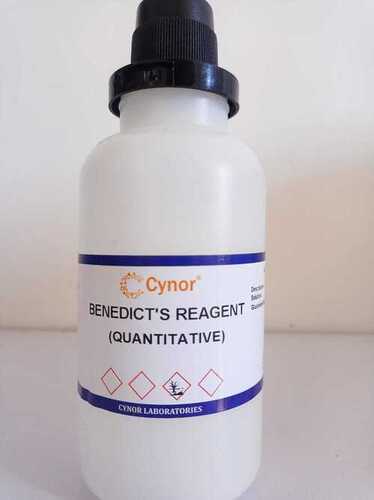
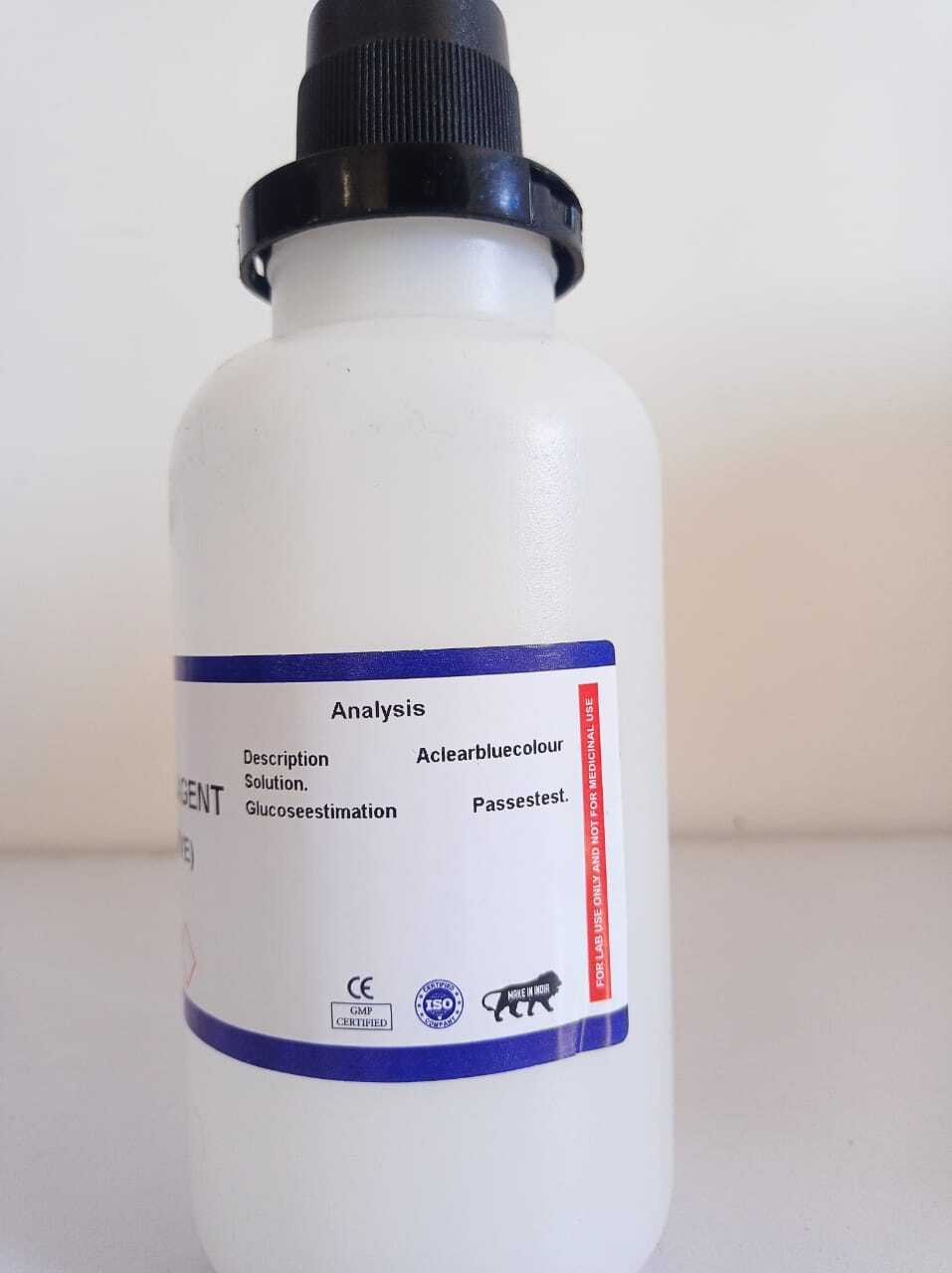
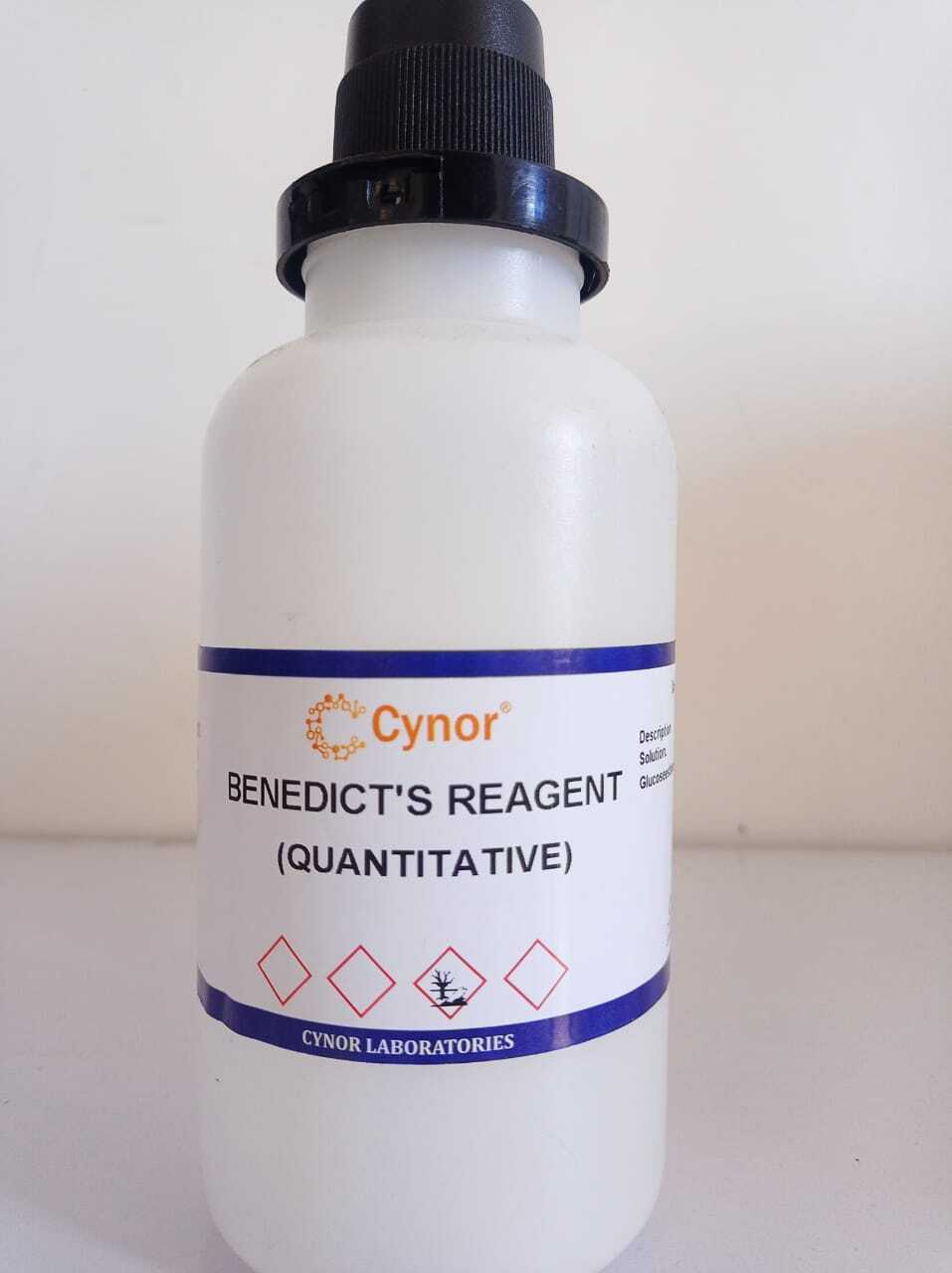
BENEDICT'S REAGENT (Quantitative) (500 ML)
413 INR/Bottle
Product Details:
- Purity >99%
- Packaging Type Plastic Bottle
- Physical State Liquid
- Usage For quantitative analysis in chemistry experiments
- Ph Level Approximately 8.2
- Shelf Life 2 Years
- Size 500 ml
- Click to View more
X
BENEDICT'S REAGENT (Quantitative) (500 ML) Price And Quantity
- 1 Bottle
- 413 INR/Bottle
BENEDICT'S REAGENT (Quantitative) (500 ML) Product Specifications
- Detection and estimation of reducing sugars
- For quantitative analysis in chemistry experiments
- >99%
- Approximately 8.2
- Blue Solution
- 2 Years
- 500 ml
- Store in a cool, dry place away from direct sunlight.
- >99%
- Plastic Bottle
- Quantitative Reagent
- Liquid
- Laboratory Grade
- Soluble in water
- Irritant, handle with care
- 38220090 for laboratory chemicals
- Copper(II) sulfate, Sodium carbonate, Sodium citrate
- Ambient
Product Description
Benedict's reagent (often called Benedict's qualitative solution or Benedict's solution) is a chemical reagent and complex mixture of sodium carbonate, sodium citrate, and copper(II) sulfate pentahydrate.[1] It is often used in place of Fehling's solution to detect the presence of reducing sugars. The presence of other reducing substances also gives a positive result.[2] Such tests that use this reagent are called the Benedict's tests. A positive test with Benedict's reagent is shown by a color change from clear blue to brick-red with a precipitate.
Precise Quantitative Sugar Detection
Benedicts Reagent is specifically formulated for the accurate quantitative analysis of reducing sugars in laboratory experiments. Its robust composition ensures sensitivity and precision, making it a reliable choice for chemists who require dependable results. This ready-to-use blue solution is an essential component in educational and research laboratories.
Safe Handling and Storage Guidelines
Due to its irritant nature, Benedicts Reagent should always be handled with appropriate protective equipment such as gloves and goggles. Store the reagent at room temperature, in a cool and dry place, away from sunlight, to maintain its stability and effectiveness. Proper storage helps preserve its purity and extends the shelf life to 2 years.
High Purity Assured for Laboratory Use
Comprised of Copper(II) sulfate, Sodium carbonate, and Sodium citrate, and produced under strict laboratory-grade standards, Benedicts Reagent guarantees over 99% purity. This ensures that the reagent delivers accurate and reliable results for every application, essential for research, analytical, and teaching laboratories.
FAQ's of BENEDICT'S REAGENT (Quantitative) (500 ML):
Q: How should I use BENEDICTS REAGENT (Quantitative) for detecting reducing sugars?
A: Benedicts Reagent is used by adding a measured quantity to the sample containing potentially reducing sugars, then heating the mixture. The presence and amount of reducing sugars are indicated by a color change, which can be measured quantitatively for accurate analysis.Q: What are the recommended storage conditions for this reagent?
A: Store the reagent in a plastic bottle at ambient temperature in a cool, dry place, away from direct sunlight. This ensures the solution maintains its purity and remains effective throughout its 2-year shelf life.Q: When should I replace BENEDICTS REAGENT to ensure accuracy?
A: It is advisable to replace the solution if it is past its 2-year shelf life or if you notice any change in appearance or performance, to guarantee continued accuracy in your laboratory analyses.Q: Where can BENEDICTS REAGENT (Quantitative) be used?
A: This reagent is ideal for use in school, college, and research laboratories across India and internationally, wherever the quantitative detection of reducing sugars is required.Q: What steps are involved in the quantitative analysis using this reagent?
A: The process involves mixing the reagent with the test solution, heating it to initiate the reaction, and observing the resulting color change. The intensity of the color can then be measured and compared to a standard, allowing precise estimation of reducing sugars.Q: What is the benefit of using this laboratory-grade reagent over others?
A: BENEDICTS REAGENT (Quantitative) offers high purity (>99%), reliable solubility in water, standardized performance, and precise quantitative analysis, making it a trusted choice for accurate laboratory experiments.Q: How do I handle BENEDICTS REAGENT safely?
A: Since the solution is classified as an irritant, always handle it with gloves and eye protection. Take care to avoid spills and wash hands thoroughly after use to minimize risks associated with skin or eye contact.Tell us about your requirement

Price:
Quantity
Select Unit
- 50
- 100
- 200
- 250
- 500
- 1000+
Additional detail
Mobile number
Email

Other Products in 'Laboratory Chemicals' category

 Send Inquiry
Our Products
- Laboratory Chemicals
- Metal Powder
- Industrial Chemicals
- Pharmaceutical Chemicals
- Industrial Acid
- Calcium Carbonate
- Ph Indicator Paper
- Isopropyl Alcohol
- Ph Testing Paper
- Fertilizers
- Chemical Test Kits
- Insecticides
- Starch Powder
- Laboratory Reagents
- Chemical Dyes
- Chemical Liquid
- Acetic Acid
- Reactive Dyes
- Speciality Chemicals
- Chemical Compound
- Indicators
- Fine Chemicals
- LIQUID LAB CHEM
- Chemical Powder
- Api Intermediate
- Potassium Salts
- Intermediates
- Specialty Chemical
- Sodium Salts
- Silver Salts
- Pharmaceutical Intermediates
- Water Treatment Chemicals
- Pharma Intermediates
- Cosmetic Chemicals
- Pyridine Derivatives
- Active Pharmaceutical Ingredients
- Laboratory Equipment
- Chemical
- CALCIUM SALTS
- Acids
- Liquid Chemical
- Dyes Intermediates
- Laboratory Glassware
- SPE CHEMICAL
- Organic Chemicals
- Benzene
- Chemical Solvent
- Acetophenone


Plot No. 1411, Shop No. S-17, Second Floor, Global Trade Centre, Mega Chowkdi,Ankleshwar - 393002, Gujarat, India

Mr Uttambhai Vaghasiya
(Partner)
Mobile :07315122648
 Send Inquiry
 Send SMS
 Call Me Free
Developed and Managed by Infocom Network Private Limited.
 English
 Spanish
 French
 German
 Italian
 Chinese (Simplified)
 Japanese
 Korean
 Arabic
 Portuguese