
Call us now :07315122648
 Send Inquiry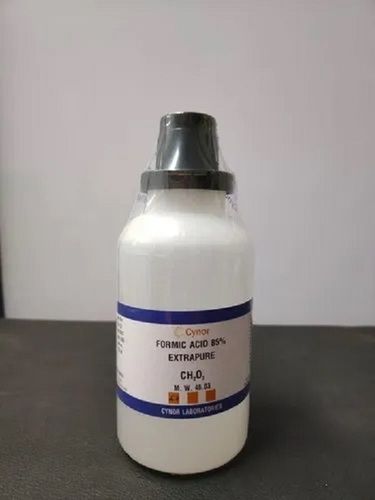
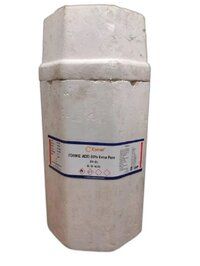
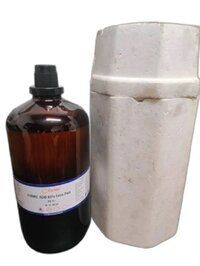
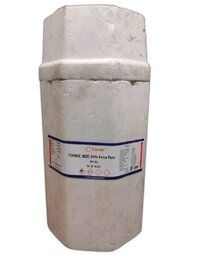
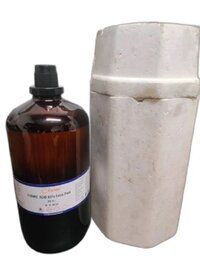
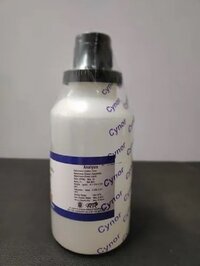
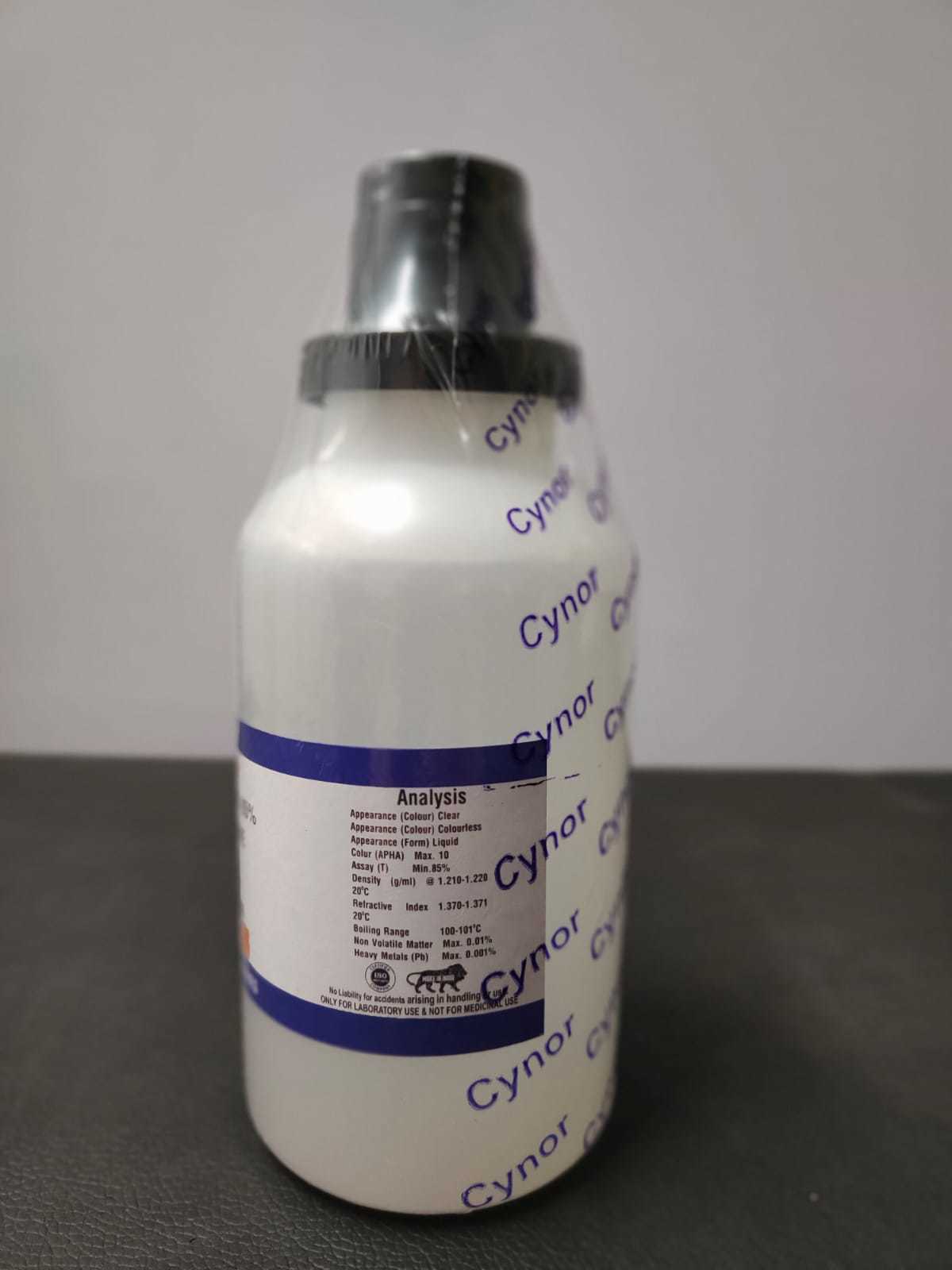
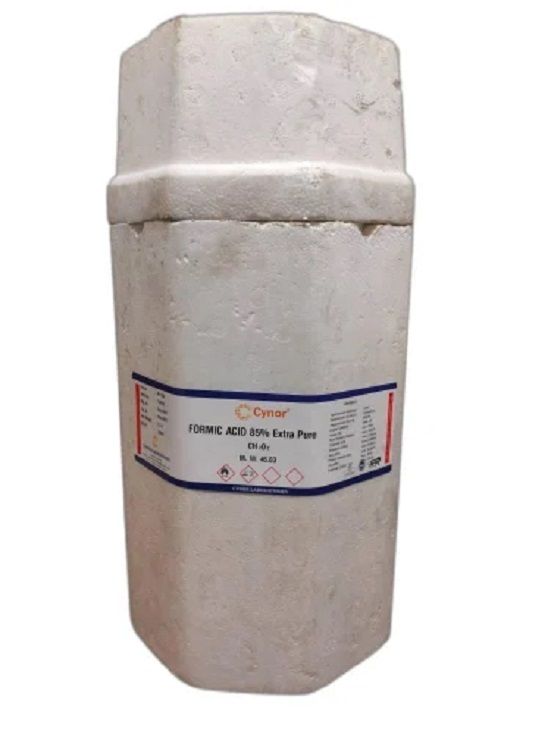
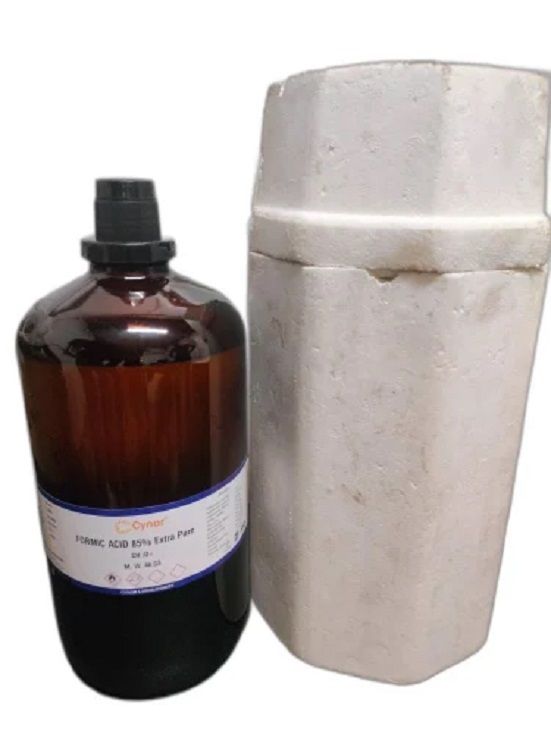
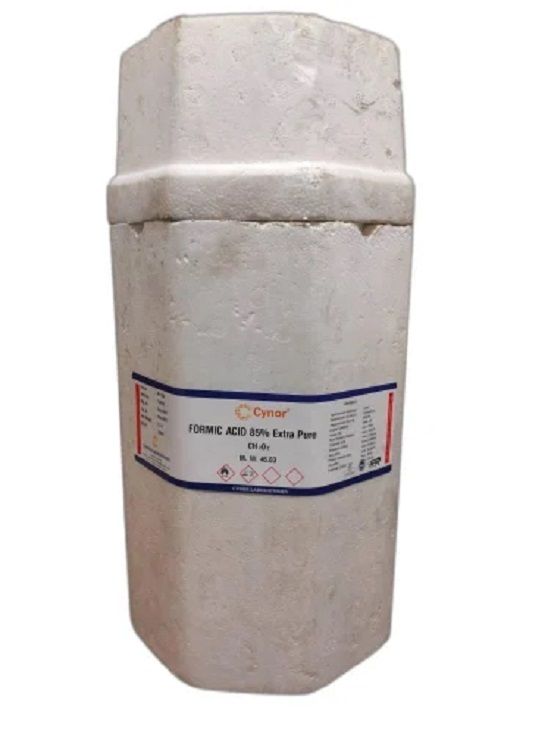
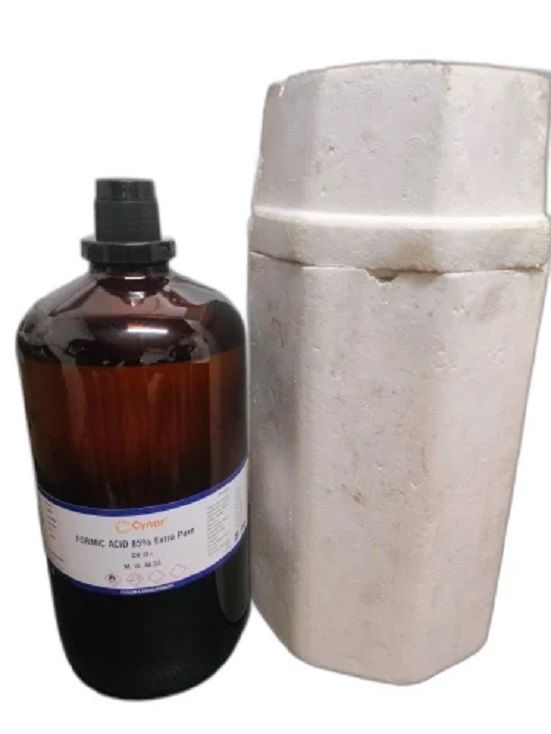
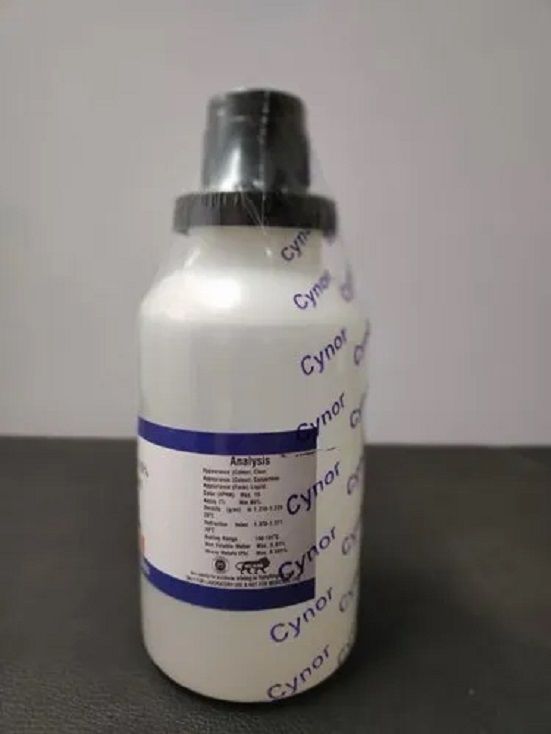
FORMIC ACID
614 INR/Piece
Product Details:
- Storage Instructions Store in a cool, dry, well-ventilated place. Keep container tightly closed.
- Flash Point 69 °C (closed cup)
- Molecular Formula CH2O2
- Packaging Type HDPE drum, bottle, carboy
- Molecular Weight 46.03 g/mol
- CAS No 64-18-6
- Size 500 ml, 1 L, 5 L, 25 L
- Click to View more
X
FORMIC ACID Price And Quantity
- 614 INR/Piece
- 1 Bottle
FORMIC ACID Product Specifications
- Store in a cool, dry, well-ventilated place. Keep container tightly closed.
- University Lab Chemicals
- clear and colourless
- 69 °C (closed cup)
- Laboratory reagent, preservative, industrial processing, leather tanning, agriculture
- CH2O2
- HDPE drum, bottle, carboy
- 46.03 g/mol
- 64-18-6
- 500 ml, 1 L, 5 L, 25 L
- Min 85%
- 100.8 °C
- 24 months
- 8.4 °C
- 2.2 (20% solution)
- Liquid
- 1.22 Gram per cubic centimeter(g/cm3)
- Laboratory, Research, Industrial
- Min 85%
- Harmful if swallowed, causes severe skin burns and eye damage
- 1.371 (20°C)
- >=85% by weight
- Pungent
- 1.57 mPa·s (at 25°C)
- 29151100
- Miscible with water, ethanol, ether, glycerol, acetone
- UN 1779
- Stable under recommended storage conditions
FORMIC ACID Trade Information
- 1000 Bottle Per Day
- 15 Days
- Yes
- Sample costs shipping and taxes has to be paid by the buyer
- 500ml
- Manipur, Dadra and Nagar Haveli, Chandigarh, Himachal Pradesh, Andaman and Nicobar Islands, Uttarakhand, Daman and Diu, Lakshadweep, Rajasthan, Gujarat, Pondicherry, Karnataka, Maharashtra, Punjab, Bihar, Jammu and Kashmir, West Bengal, Tamil Nadu, Goa, Uttar Pradesh, East India, Meghalaya, Mizoram, South India, Sikkim, Delhi, Tripura, Telangana, Haryana, Madhya Pradesh, Assam, Arunachal Pradesh, Jharkhand, West India, Nagaland, North India, Andhra Pradesh, Kerala, Central India, Odisha, Chhattisgarh, All India
Product Description
Product Details
|
CAS Number |
64-18-6 |
|
CAS No |
64-18-6 |
|
Usage/Application |
Laboratory |
|
Purity % |
85% |
|
Packaging Size |
500 ML |
|
Packaging Details |
500 ML |
|
Grade Standard |
Lab Grade |
|
Form |
Liquid |
|
Physical State |
Liquid |
|
Colour |
COLOURLESS |
|
Density |
1.210-1.220 |
|
Boiling Point |
100-101 |
|
Refractive index |
1.370-1.371 |
|
Country of Origin |
Made in India |
Versatile Applications of Formic Acid
Formic acid serves multiple functions across laboratory research, industrial processing, agriculture, and leather tanning. Its miscibility and high purity ensure effective performance, whether it's used as a reagent in chemical analysis, a preservative, or an active agent in manufacturing. This adaptability makes it an indispensable resource in both scientific and commercial settings.
Safe Handling and Storage Guidelines
Given its corrosive nature and strong acidity (pH 2.2), formic acid must be handled with caution. Always store it in a cool, dry, well-ventilated area within tightly sealed HDPE drums, bottles, or carboys. Appropriate safety measures, including gloves and eye protection, are essential to prevent burns and damage in case of accidental contact.
FAQ's of FORMIC ACID:
Q: How should formic acid be safely stored to maintain its stability?
A: Formic acid should be stored in a cool, dry, well-ventilated location in tightly closed HDPE containers. This prevents moisture ingress and maintains its chemical stability throughout its 24-month shelf life.Q: What are the main uses of formic acid in university laboratories and industries?
A: Formic acid is commonly used as a reagent for chemical analysis, a preservative, in leather tanning, agriculture, and various industrial processes due to its high purity and reliable performance.Q: When is formic acid considered harmful, and what hazards should be noted during use?
A: Formic acid is harmful if swallowed and causes severe skin burns and eye damage. Proper protective equipment and handling protocols must be followed during use to prevent injury.Q: Where can formic acid be applied beyond laboratory settings?
A: Formic acid finds applications in industrial processing, leather tanning, agriculture, and as a preservative, making it suitable for both research and commercial purposes.Q: What is the process for disposing of formic acid safely?
A: Formic acid disposal should follow local regulations for hazardous chemicals. The substance must be neutralized and handled by qualified personnel using appropriate protective gear to avoid environmental harm or personal injury.Q: How does the high purity of formic acid benefit laboratory research?
A: The minimum 85% purity ensures reliable and consistent results in scientific experiments, analytical procedures, and chemical syntheses, reducing the risk of contamination or errors.Tell us about your requirement

Price:
Quantity
Select Unit
- 50
- 100
- 200
- 250
- 500
- 1000+
Additional detail
Mobile number
Email

Other Products in 'Laboratory Chemicals' category

 Send Inquiry
Our Products
- Laboratory Chemicals
- Metal Powder
- Industrial Chemicals
- Pharmaceutical Chemicals
- Industrial Acid
- Calcium Carbonate
- Ph Indicator Paper
- Isopropyl Alcohol
- Ph Testing Paper
- Fertilizers
- Chemical Test Kits
- Insecticides
- Starch Powder
- Laboratory Reagents
- Chemical Dyes
- Chemical Liquid
- Acetic Acid
- Reactive Dyes
- Speciality Chemicals
- Chemical Compound
- Indicators
- Fine Chemicals
- LIQUID LAB CHEM
- Chemical Powder
- Api Intermediate
- Potassium Salts
- Intermediates
- Specialty Chemical
- Sodium Salts
- Silver Salts
- Pharmaceutical Intermediates
- Water Treatment Chemicals
- Pharma Intermediates
- Cosmetic Chemicals
- Pyridine Derivatives
- Active Pharmaceutical Ingredients
- Laboratory Equipment
- Chemical
- CALCIUM SALTS
- Acids
- Liquid Chemical
- Dyes Intermediates
- Laboratory Glassware
- SPE CHEMICAL
- Organic Chemicals
- Benzene
- Chemical Solvent
- Acetophenone


Plot No. 1411, Shop No. S-17, Second Floor, Global Trade Centre, Mega Chowkdi,Ankleshwar - 393002, Gujarat, India

Mr Uttambhai Vaghasiya
(Partner)
Mobile :07315122648
 Send Inquiry
 Send SMS
 Call Me Free
Developed and Managed by Infocom Network Private Limited.
 English
 Spanish
 French
 German
 Italian
 Chinese (Simplified)
 Japanese
 Korean
 Arabic
 Portuguese