
Call us now :07315122648
 Send Inquiry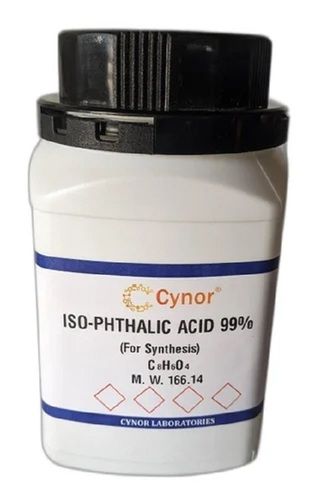
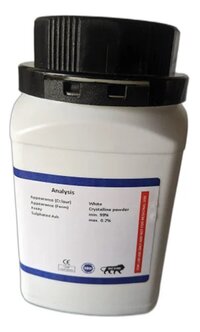
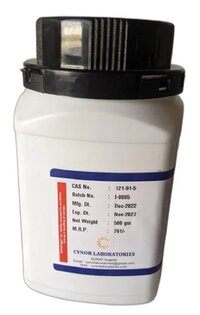
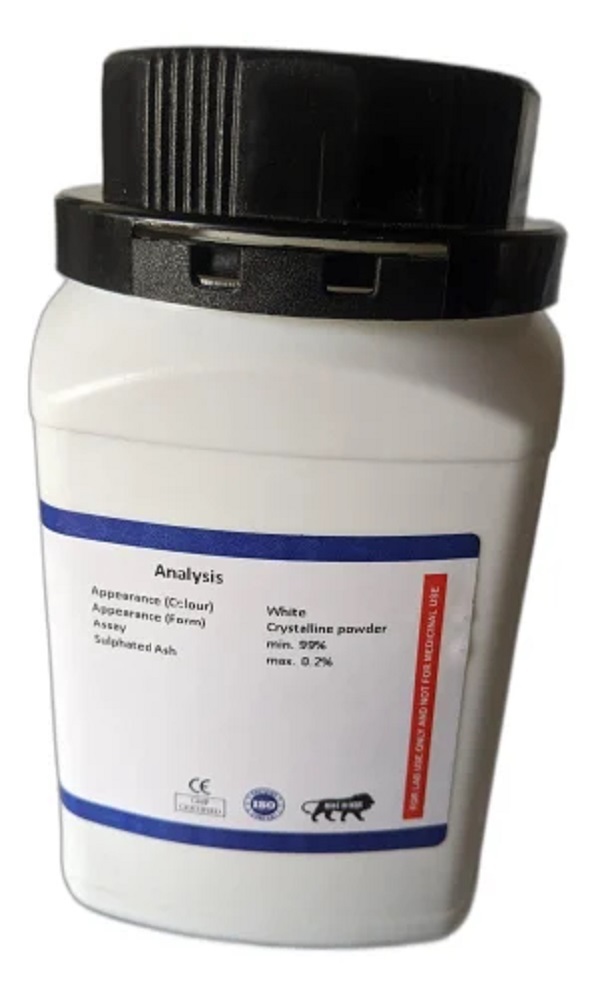
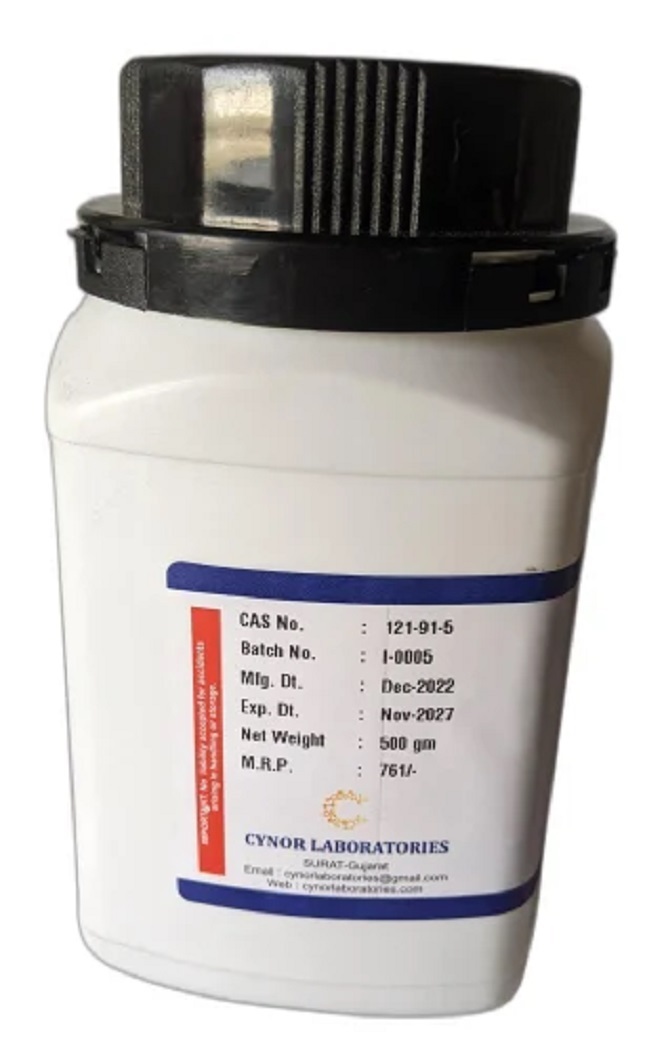
Iso Phthalic Acid 99% For Synthesis
700 INR/Bottle
Product Details:
- Boiling point Not available (decomposes)
- Packaging Type Bottle
- Flash Point Non-flammable
- Melting Point 345 C
- Molecular Formula C8H6O4
- Physical State Solid
- Size 100 g, 500 g, 1 kg (various sizes available)
- Click to View more
X
Iso Phthalic Acid 99% For Synthesis Price And Quantity
- 700 INR/Bottle
- 1 Bottle
Iso Phthalic Acid 99% For Synthesis Product Specifications
- 121-91-5
- 99
- Bottle
- Not available (decomposes)
- C8H6O4
- Synthesis
- 345 C
- Non-flammable
- 166.13 g/mol
- White crystalline powder
- Scientific Lab Chemicals
- For synthesis and laboratory use
- 1.53 Gram per cubic centimeter(g/cm3)
- 100 g, 500 g, 1 kg (various sizes available)
- Solid
- 99%
- 5 years
- Store in tightly closed container, in a cool, dry, and well-ventilated area.
- Laboratory research, analytical chemistry, organic synthesis
- Odorless
- 204-506-4
- Not classified as hazardous under GHS
- Slightly soluble in water, soluble in alcohol and ether
- Not applicable (solid)
- Isophthalic acid, Benzene-1,3-dicarboxylic acid
- 0.1%
- 29173990
Iso Phthalic Acid 99% For Synthesis Trade Information
- Cash Advance (CA), Cash in Advance (CID)
- 100 Bottle Per Day
- 10 Days
- Yes
- Sample costs shipping and taxes has to be paid by the buyer
- Western Europe, Central America, Australia, North America, Middle East, Eastern Europe, South America, Asia, Africa
- Chandigarh, Himachal Pradesh, Andaman and Nicobar Islands, Uttarakhand, Daman and Diu, Dadra and Nagar Haveli, Lakshadweep, Gujarat, South India, East India, West India, Andhra Pradesh, Assam, Arunachal Pradesh, Bihar, Delhi, Goa, Jammu and Kashmir, Jharkhand, Karnataka, Madhya Pradesh, Maharashtra, Mizoram, Meghalaya, Manipur, Punjab, Pondicherry, Rajasthan, Sikkim, Tamil Nadu, Telangana, Tripura, Nagaland, West Bengal, Haryana, Uttar Pradesh, North India, Kerala, Central India, Odisha, Chhattisgarh, All India
Product Description
Isophthalic acid is an organic compound with the formula C6H4(CO2H)2. This colorless solid is an isomer of phthalic acid and terephthalic acid. The main industrial uses of purified isophthalic acid (PIA) are for the production of polyethylene terephthalate (PET) resin and for the production of unsaturated polyester resin (UPR) and other types of coating resins.High Purity and Reliable Performance
With a purity of 99% and impurities limited to 0.1%, Iso Phthalic Acid ensures consistent and accurate results for demanding laboratory and synthesis applications. The product's solid white crystalline form and stability make it highly adaptable for precise scientific requirements.
Versatile Laboratory Use
Iso Phthalic Acid, also known as Benzene-1,3-dicarboxylic acid, is widely utilized in organic synthesis, analytical chemistry, and general laboratory research. Its compatibility with alcohol and ether, along with its stable shelf life of 5 years, makes it a practical choice for various research and testing scenarios.
Safe Handling and Convenient Storage
Non-flammable and classified as non-hazardous under GHS, Iso Phthalic Acid provides safer handling for lab personnel. Packaging in secure bottles and recommended storage in cool, dry, and well-ventilated areas help preserve product integrity and ensure ease of use over time.
FAQ's of Iso Phthalic Acid 99% For Synthesis:
Q: How should Iso Phthalic Acid 99% for Synthesis be stored for maximum shelf life?
A: For optimal stability, store Iso Phthalic Acid in a tightly closed container in a cool, dry, and well-ventilated place. Proper storage helps maintain its 5-year shelf life and prevents contamination or degradation.Q: What are the primary uses of Isophthalic Acid in the laboratory?
A: Isophthalic Acid is predominantly used in laboratory research, organic synthesis, and analytical chemistry. Its high purity makes it suitable for creating reference materials, intermediates, and for conducting specialized chemical reactions.Q: When should I choose Iso Phthalic Acid over other dicarboxylic acids?
A: Select Iso Phthalic Acid when your synthesis or research requires a benzene-1,3-dicarboxylic substitution pattern, as it provides distinct reactivity compared to other isomers like terephthalic or phthalic acid.Q: Where is Iso Phthalic Acid commonly applied outside of lab-scale experiments?
A: While primarily intended for laboratory and synthesis use, Iso Phthalic Acid is also a vital intermediate in industrial settings for producing polyester resins and plasticizers, though the supplied synthesis grade is optimized for research rather than large-scale manufacturing.Q: What benefits does Iso Phthalic Acid offer to laboratory users?
A: Iso Phthalic Acid's high purity, stable physical properties, and non-hazardous classification provide reliable, reproducible outcomes while minimizing safety risks and simplifying storage requirements for researchers.Q: What process should be followed for handling and disposing of Iso Phthalic Acid in the lab?
A: Always wear appropriate PPE when handling Iso Phthalic Acid. Dispose of any waste materials in accordance with local regulations for chemical substances, as standard laboratory waste protocols apply due to its non-hazardous nature.Q: How is Iso Phthalic Acid packaged and supplied for laboratory use?
A: It is supplied in sealed bottles across various sizes such as 100 g, 500 g, and 1 kg. Each package ensures convenient dispensing and safe storage for different laboratory needs.Tell us about your requirement

Price:
Quantity
Select Unit
- 50
- 100
- 200
- 250
- 500
- 1000+
Additional detail
Mobile number
Email

Other Products in 'Laboratory Chemicals' category

 Send Inquiry
Our Products
- Laboratory Chemicals
- Metal Powder
- Industrial Chemicals
- Pharmaceutical Chemicals
- Industrial Acid
- Calcium Carbonate
- Ph Indicator Paper
- Isopropyl Alcohol
- Ph Testing Paper
- Fertilizers
- Chemical Test Kits
- Insecticides
- Starch Powder
- Laboratory Reagents
- Chemical Dyes
- Chemical Liquid
- Acetic Acid
- Reactive Dyes
- Speciality Chemicals
- Chemical Compound
- Indicators
- Fine Chemicals
- LIQUID LAB CHEM
- Chemical Powder
- Api Intermediate
- Potassium Salts
- Intermediates
- Specialty Chemical
- Sodium Salts
- Silver Salts
- Pharmaceutical Intermediates
- Water Treatment Chemicals
- Pharma Intermediates
- Cosmetic Chemicals
- Pyridine Derivatives
- Active Pharmaceutical Ingredients
- Laboratory Equipment
- Chemical
- CALCIUM SALTS
- Acids
- Liquid Chemical
- Dyes Intermediates
- Laboratory Glassware
- SPE CHEMICAL
- Organic Chemicals
- Benzene
- Chemical Solvent
- Acetophenone


Plot No. 1411, Shop No. S-17, Second Floor, Global Trade Centre, Mega Chowkdi,Ankleshwar - 393002, Gujarat, India

Mr Uttambhai Vaghasiya
(Partner)
Mobile :07315122648
 Send Inquiry
 Send SMS
 Call Me Free
Developed and Managed by Infocom Network Private Limited.
 English
 Spanish
 French
 German
 Italian
 Chinese (Simplified)
 Japanese
 Korean
 Arabic
 Portuguese