
Call us now :07315122648
 Send Inquiry
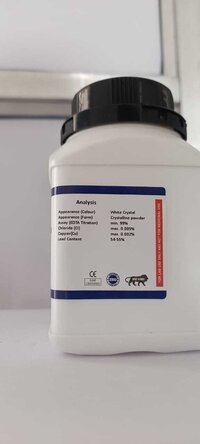
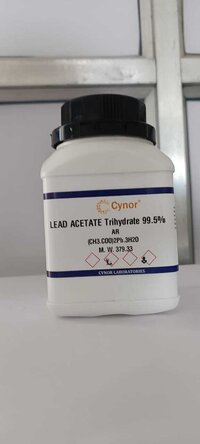
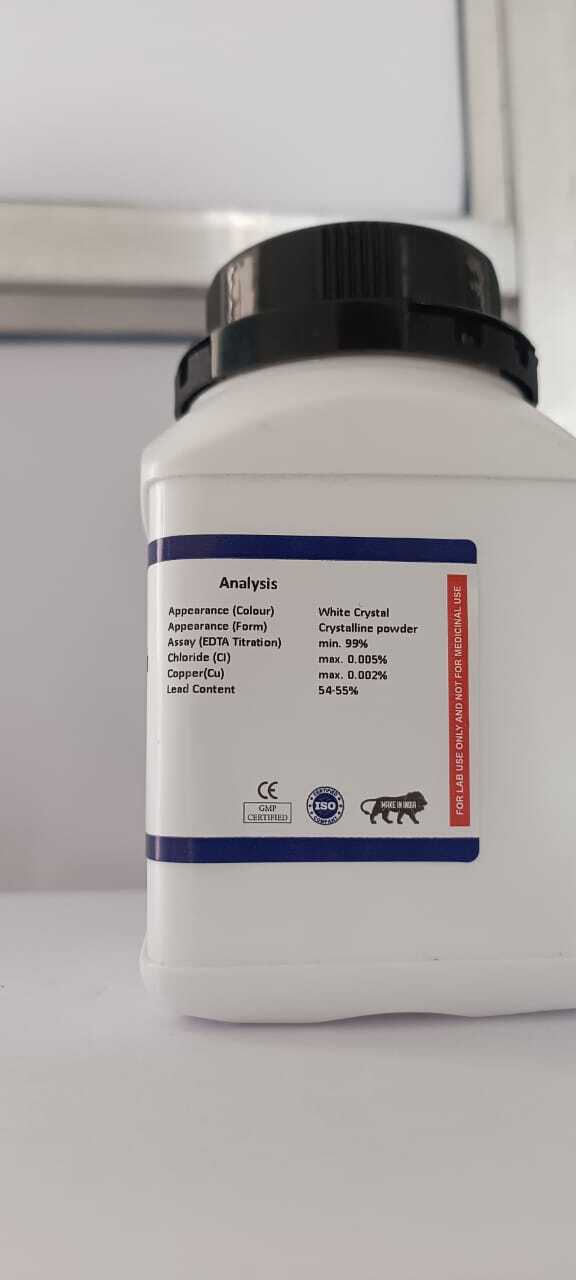
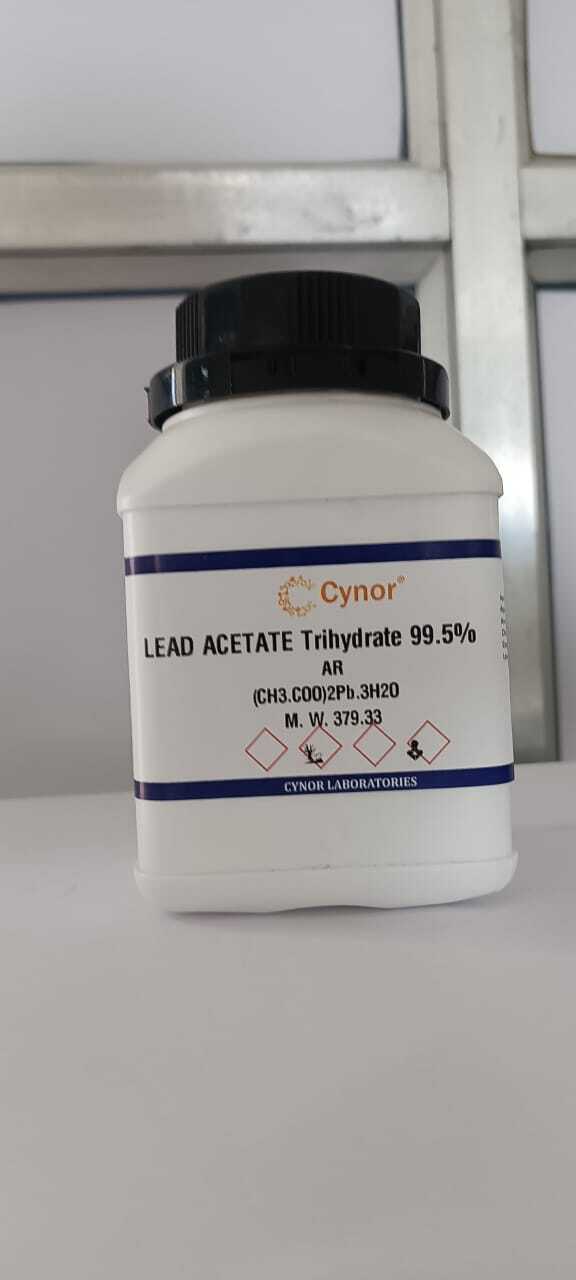
LEAD ACETATE Trihydrate 99.5% AR (500 gm)
861 INR/Bottle
Product Details:
- Smell Odorless
- Grade AR (Analytical Reagent)
- Boiling point Decomposes
- Appearance Crystalline solid
- Other Names Sugar of Lead, Goulards Powder
- HS Code 29152990
- Ph Level Neutral to slightly acidic (pH 5.57)
- Click to View more
X
LEAD ACETATE Trihydrate 99.5% AR (500 gm) Price And Quantity
- 861 INR/Bottle
- 1 Bottle
LEAD ACETATE Trihydrate 99.5% AR (500 gm) Product Specifications
- White
- Crystalline solid
- AR (Analytical Reagent)
- Odorless
- Decomposes
- Used in analytical chemistry, as a laboratory reagent, in textile printing and dyeing, and as a stabilizer in some industrial processes.
- Granular/Crystalline
- Pb(C2H3O2)23H2O
- 379.33 g/mol
- Store tightly closed in a cool, dry, well-ventilated area away from incompatible substances.
- Sugar of Lead, Goulards Powder
- 29152990
- Neutral to slightly acidic (pH 5.57)
- 99.5%
- Yes
- Inorganic Compound
- Lead(II) acetate trihydrate
- 36 months
- 6080-56-4
- Solid
- Slightly Sweet
- 206-104-4
- 2.55 Gram per cubic centimeter(g/cm3)
- Laboratory Reagent
- For laboratory and research purposes only. Handle with care due to toxicity.
- [Pb(CH3COO)2]3H2O
- 75 C (decomposes)
- 1616
- Use personal protective equipment (PPE); avoid inhalation and skin contact
- Lead oxides, acetic acid fumes on heating
- Stable under recommended storage conditions
- Toxic if swallowed or inhaled; may cause lead poisoning
- Dispose of in accordance with local, regional, and national regulations
- Soluble in water, slightly soluble in ethanol
- 500 grams bottle
Product Description
Lead(II) acetate, also known as lead acetate, lead diacetate, plumbous acetate, sugar of lead, lead sugar, salt of Saturn, or Goulard's powder, is a white crystalline chemical compound with a slightly sweet taste. Its chemical formula is usually expressed as Pb(CH3COO)2 or Pb(OAc)2, where Ac represents the acetyl group. Like many other lead compounds, it causes lead poisoning. Lead acetate is soluble in water and glycerin. With water it forms the trihydrate, Pb(OAc)23H2O, a colourless or white efflorescent monoclinic crystalline substance.
High Purity Laboratory Reagent
LEAD ACETATE Trihydrate 99.5% AR offers exceptional purity for accurate and reliable results in analytical chemistry and various laboratory applications. Its AR (Analytical Reagent) grade assures stringent quality, making it ideal for controlled experimental processes and specialized research purposes.
Safe Storage and Stable Performance
This reagent is stable under proper storage conditions-keep the tightly sealed crystalline solid in a cool, dry, and well-ventilated area away from incompatible substances. With a shelf life of up to 36 months, it maintains efficacy for extended use if storage guidelines are followed.
Versatile Industrial and Laboratory Applications
Utilized in textile printing, dyeing, and as a stabilizer in industrial settings, LEAD ACETATE Trihydrate meets various research and production needs. Its neutral to slightly acidic pH supports specialized processes, making it valuable for scientific, analytical, and quality control tasks.
FAQ's of LEAD ACETATE Trihydrate 99.5% AR (500 gm):
Q: How should LEAD ACETATE Trihydrate 99.5% AR be properly handled and used in the laboratory?
A: Handle this compound only in a laboratory environment using approved personal protective equipment, such as gloves, goggles, and appropriate lab coats. Ensure good ventilation and avoid breathing dust or vapors. Use it exclusively for analytical, research, or specified industrial applications as directed.Q: What are the main hazards associated with LEAD ACETATE Trihydrate?
A: LEAD ACETATE Trihydrate is toxic if swallowed or inhaled and may result in lead poisoning. Avoid direct skin contact and inhalation. Exposure may cause serious health effects, so always handle with care and follow institutional safety protocols.Q: When is it necessary to consider special disposal procedures for this compound?
A: Disposal of LEAD ACETATE Trihydrate waste should be conducted as soon as it is no longer required, following all local, regional, and national hazardous chemical regulations. Do not dispose of in regular trash or drains; contact a licensed hazardous waste handler if needed.Q: Where should LEAD ACETATE Trihydrate 99.5% AR be stored for maximum stability?
A: Store the reagent in a cool, dry, well-ventilated location, tightly sealed away from any incompatible substances to ensure maximum stability and safety. Avoid exposure to heat sources, which may cause decomposition into toxic lead oxides and acetic acid fumes.Q: What makes this product beneficial for laboratory and industrial use?
A: Its high purity (99.5% AR grade) and reliable stability make LEAD ACETATE Trihydrate suitable for precise analytical work, chemical synthesis, and industrial applications demanding accuracy and consistency. Its solubility enhances its usability across diverse research and quality control processes.Q: How can accidental exposure to this product be managed?
A: In case of accidental skin contact, rinse thoroughly with plenty of water. If inhaled or ingested, seek immediate medical assistance. Always use this product in compliance with recommended safety instructions and have emergency procedures in place.Tell us about your requirement

Price:
Quantity
Select Unit
- 50
- 100
- 200
- 250
- 500
- 1000+
Additional detail
Mobile number
Email

Other Products in 'Laboratory Reagents' category

 Send Inquiry
Our Products
- Laboratory Chemicals
- Metal Powder
- Industrial Chemicals
- Pharmaceutical Chemicals
- Industrial Acid
- Calcium Carbonate
- Ph Indicator Paper
- Isopropyl Alcohol
- Ph Testing Paper
- Fertilizers
- Chemical Test Kits
- Insecticides
- Starch Powder
- Laboratory Reagents
- Chemical Dyes
- Chemical Liquid
- Acetic Acid
- Reactive Dyes
- Speciality Chemicals
- Chemical Compound
- Indicators
- Fine Chemicals
- LIQUID LAB CHEM
- Chemical Powder
- Api Intermediate
- Potassium Salts
- Intermediates
- Specialty Chemical
- Sodium Salts
- Silver Salts
- Pharmaceutical Intermediates
- Water Treatment Chemicals
- Pharma Intermediates
- Cosmetic Chemicals
- Pyridine Derivatives
- Active Pharmaceutical Ingredients
- Laboratory Equipment
- Chemical
- CALCIUM SALTS
- Acids
- Liquid Chemical
- Dyes Intermediates
- Laboratory Glassware
- SPE CHEMICAL
- Organic Chemicals
- Benzene
- Chemical Solvent
- Acetophenone


Plot No. 1411, Shop No. S-17, Second Floor, Global Trade Centre, Mega Chowkdi,Ankleshwar - 393002, Gujarat, India

Mr Uttambhai Vaghasiya
(Partner)
Mobile :07315122648
 Send Inquiry
 Send SMS
 Call Me Free
Developed and Managed by Infocom Network Private Limited.
 English
 Spanish
 French
 German
 Italian
 Chinese (Simplified)
 Japanese
 Korean
 Arabic
 Portuguese