
Call us now :07315122648
 Send Inquiry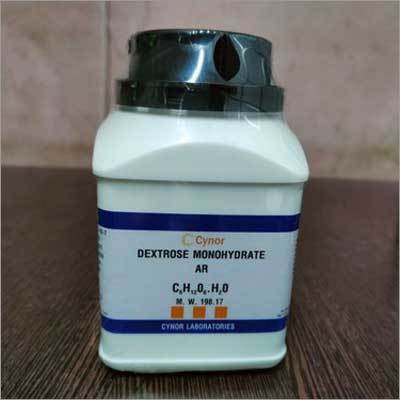
Dextrose Monohydrate
230 INR/Piece
Product Details:
- Molecular Weight 198.17 g/mol
- Purity 99%
- Size Custom packaging sizes available
- Packaging Type HDPE bag / Drum / Custom packing
- Density 1.54 Gram per cubic centimeter(g/cm3)
- Boiling point Decomposes before boiling
- Molecular Formula C6H12O6H2O
- Click to View more
X
Dextrose Monohydrate Price And Quantity
- 1 Piece
- 230 INR/Piece
Dextrose Monohydrate Product Specifications
- 99%
- 5996-10-1
- University Lab Chemicals
- 24 Months
- Store in a cool, dry place; keep container tightly closed
- Solid
- 83C
- Used as sweetener, fermentation substrate, reducing sugar tester, lab reagent
- EXTRA PURE
- Food Industries, Pharmaceutical, Biotechnology, Laboratory Reagent
- 198.17 g/mol
- White Crystalline Powder
- 99%
- Custom packaging sizes available
- HDPE bag / Drum / Custom packing
- 1.54 Gram per cubic centimeter(g/cm3)
- Decomposes before boiling
- C6H12O6H2O
- 4.0 6.5 (50g/L, H2O, 20C)
- Not hazardous
- Sweet
- Room temperature
- Soluble in water, slightly soluble in alcohol
- Analytical Grade, Laboratory Grade, Food Grade
- 1.333 (water solution)
- Odorless
- 202-016-5
- Stable under normal conditions
- 17023000
Dextrose Monohydrate Trade Information
- Cash Advance (CA)
- 1000 Piece Per Day
- 7 Days
- Yes
- Sample costs shipping and taxes has to be paid by the buyer
- 500 gm
- Australia, North America, South America, Eastern Europe, Western Europe, Middle East, Africa, Central America, Asia
- Dadra and Nagar Haveli, Himachal Pradesh, Andaman and Nicobar Islands, Uttarakhand, Daman and Diu, Lakshadweep, South India, North India, East India, West India, Andhra Pradesh, Assam, Arunachal Pradesh, Bihar, Chandigarh, Goa, Haryana, Jammu and Kashmir, Jharkhand, Karnataka, Madhya Pradesh, Maharashtra, Mizoram, Meghalaya, Manipur, Punjab, Pondicherry, Rajasthan, Sikkim, Tamil Nadu, Telangana, Tripura, West Bengal, Nagaland, Gujarat, Delhi, Kerala, Central India, Odisha, Chhattisgarh, Uttar Pradesh, All India
Product Description
Product details
|
Packaging Size |
500 GM |
|
Brand |
CYNOR |
|
Purity |
min 99.5 |
|
CAS No |
14431-43-7 |
|
Purity % |
>99% |
|
Grade |
AR |
|
Usage/Application |
LABORATORY USE |
|
Packaging Details |
500 GM |
|
Packaging Type |
HDPE BOTTLE |
|
Grade Standard |
Analytical Grade |
1 KG, 5 KG, 50 KG ALSO AVAILABLE
Versatile Applications Across Industries
Dextrose Monohydrate finds extensive use as a sweetener in food processing, a fermentation substrate in biotechnology, and a chemical reagent in laboratories. Its high purity (99%) and extra pure grade make it ideal for sensitive scientific and industrial processes, ensuring reliable and consistent results. Its compatibility with a range of packaging sizes allows for convenient use in diverse sectors.
Outstanding Solubility and Stability
This compound dissolves readily in water, making it easy to integrate into aqueous systems, while its slight solubility in alcohol expands its utility. Dextrose Monohydrate remains stable under normal room temperatures and dry conditions, retaining its functionality and shelf life for up to 24 months with proper storage.
Safety and Compliance for Laboratory and Industrial Use
Dextrose Monohydrate is classified as non-hazardous and complies with various international standards. Its packaging options ensure safe transport and minimal risk of contamination, making it suitable for laboratories, manufacturing, and academic environments alike. The product is distributed, imported, and supplied across India.
FAQ's of Dextrose Monohydrate:
Q: How should Dextrose Monohydrate be stored for maximum stability?
A: Dextrose Monohydrate should be stored at room temperature in a cool, dry place. Make sure the container remains tightly sealed to prevent moisture ingress, which helps maintain its stability and a shelf life of up to 24 months.Q: What are the main uses of Dextrose Monohydrate in industrial and laboratory settings?
A: Dextrose Monohydrate serves as a sweetener in the food industry, a fermentation substrate in biotechnology, a reducing sugar tester, and a reagent in laboratory experiments. Its high purity and consistent solubility make it suitable for critical scientific and manufacturing processes.Q: When is Dextrose Monohydrate most commonly used in laboratories?
A: It is frequently utilized during biochemical assays, microbial fermentation experiments, and tests requiring a reducing sugar source. Its suitability for analytical and laboratory grade applications makes it a staple in research and quality control work.Q: Where can Dextrose Monohydrate be applied within the food and pharmaceutical industries?
A: In the food industry, it is used in confectionery, bakery, and beverage products as a sweetener. In pharmaceuticals, it acts as an energy source in formulations and intravenous solutions, as well as in various biotechnological applications.Q: What benefits does Dextrose Monohydrate offer compared to other sweeteners or laboratory reagents?
A: Dextrose Monohydrate offers high purity, non-hazardous classification, and excellent solubility, ensuring accurate dosages and safe handling. Its stable nature and versatility enhance its value across both scientific and industrial processes.Q: How does the packing and distribution process ensure product quality?
A: The chemical is supplied in HDPE bags, drums, or custom packaging to prevent contamination and moisture exposure. These measures are essential for maintaining product quality during storage, transport, and distribution throughout India.Tell us about your requirement

Price:
Quantity
Select Unit
- 50
- 100
- 200
- 250
- 500
- 1000+
Additional detail
Mobile number
Email

Other Products in 'Laboratory Chemicals' category

 Send Inquiry
Our Products
- Laboratory Chemicals
- Metal Powder
- Industrial Chemicals
- Pharmaceutical Chemicals
- Industrial Acid
- Calcium Carbonate
- Ph Indicator Paper
- Isopropyl Alcohol
- Ph Testing Paper
- Fertilizers
- Chemical Test Kits
- Insecticides
- Starch Powder
- Laboratory Reagents
- Chemical Dyes
- Chemical Liquid
- Acetic Acid
- Reactive Dyes
- Speciality Chemicals
- Chemical Compound
- Indicators
- Fine Chemicals
- LIQUID LAB CHEM
- Chemical Powder
- Api Intermediate
- Potassium Salts
- Intermediates
- Specialty Chemical
- Sodium Salts
- Silver Salts
- Pharmaceutical Intermediates
- Water Treatment Chemicals
- Pharma Intermediates
- Cosmetic Chemicals
- Pyridine Derivatives
- Active Pharmaceutical Ingredients
- Laboratory Equipment
- Chemical
- CALCIUM SALTS
- Acids
- Liquid Chemical
- Dyes Intermediates
- Laboratory Glassware
- SPE CHEMICAL
- Organic Chemicals
- Benzene
- Chemical Solvent
- Acetophenone


Plot No. 1411, Shop No. S-17, Second Floor, Global Trade Centre, Mega Chowkdi,Ankleshwar - 393002, Gujarat, India

Mr Uttambhai Vaghasiya
(Partner)
Mobile :07315122648
 Send Inquiry
 Send SMS
 Call Me Free
Developed and Managed by Infocom Network Private Limited.
 English
 Spanish
 French
 German
 Italian
 Chinese (Simplified)
 Japanese
 Korean
 Arabic
 Portuguese