
Call us now :07315122648
 Send Inquiry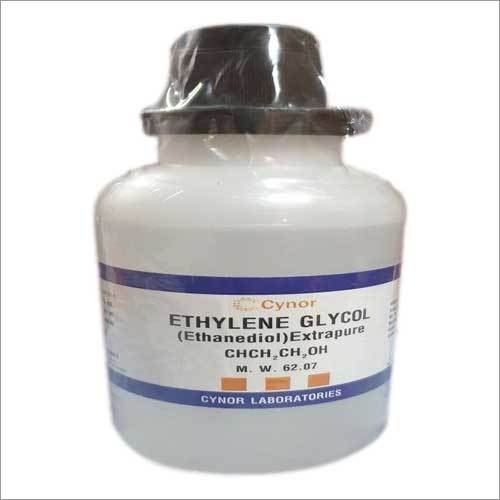
Ethylene Glycol
500 -10000000 INR/Piece
Product Details:
- Packaging Type Drum, HDPE Containers
- Flash Point 110°C
- Usage Heat Transfer Fluid, Hydraulic Brake Fluid
- Boiling point 197.3°C
- Density 1.113 Gram per cubic centimeter(g/cm3)
- Purity 99.8%
- Molecular Formula C2H6O2
- Click to View more
X
Ethylene Glycol Price And Quantity
- 1 , , Piece
- 500 -10000000 INR/Piece
Ethylene Glycol Product Specifications
- 1.113 Gram per cubic centimeter(g/cm3)
- 99.8
- 62.07 g/mol
- 99.8%
- 7
- Liquid
- Colorless Liquid
- 197.3°C
- Store in a cool, ventilated area away from sources of ignition
- -12.9°C
- Glycol
- Drum, HDPE Containers
- Various sizes available
- 110°C
- C2H6O2
- Coolants, Antifreeze, Polyester Fiber
- Industrial Grade
- 107-21-1
- 2 Years
- Heat Transfer Fluid, Hydraulic Brake Fluid
- Stable under recommended storage conditions
- Complies with ASTM D3306
- 1.431
- Carbon monoxide, carbon dioxide
- Miscible with water
- 16.1 cP at 20°C
- Odorless
- 398°C
- 0.06 mmHg @ 25°C
Ethylene Glycol Trade Information
- 1000 , , Piece Per Day
- 7 Days
Product Description
Product details
| Synonyms | Monoethylene glycol,Hypodicarbonous acid |
| CAS No | 107-21-1 |
| Chemical Formula | C2H6O2 |
| Purity % | >99% |
| Packaging Details | 1 litre Bottle |
| Physical State | Liquid |
Packing available like 500 ml, 2.5 Lit, 5 Lit etc.
Wide Range of Industrial Applications
Ethylene Glycol is widely used in the manufacturing of coolants, antifreeze, and polyester fibers. It also functions as a hydraulic brake fluid and a heat transfer medium in various industrial settings. Its high purity and chemical stability ensure reliable performance across applications.
Safe and Flexible Packaging
Available in drums and HDPE containers, Ethylene Glycol is distributed in a range of sizes to meet diverse needs. Proper packaging ensures safe handling and transport, maintaining product integrity during storage and usage.
Strict Quality and Regulatory Compliance
Complying with ASTM D3306 standards, this product meets stringent industrial quality and safety requirements. With a 2-year shelf life, stable storage conditions, and consistent purity, it is a trusted solution for manufacturers, distributors, and end users alike.
FAQ's of Ethylene Glycol:
Q: How should Ethylene Glycol be stored for optimal stability?
A: Ethylene Glycol should be kept in a cool, well-ventilated area, away from sources of ignition and incompatible substances. Using HDPE containers or drums helps maintain its stability and prevent contamination.Q: What are the main benefits of using Ethylene Glycol as a coolant or antifreeze?
A: Due to its high purity, miscibility with water, and effective heat transfer properties, Ethylene Glycol is ideal for use in cooling and antifreeze systems. It protects engines and machinery against freezing and overheating, enhancing operational efficiency.Q: When is Ethylene Glycol typically utilized in manufacturing or industrial processes?
A: Ethylene Glycol is used whenever there is a need for heat transfer fluids, antifreeze, or as a building block in the production of polyester fibers. It is applied during the formulation of hydraulic brake fluids and when temperature regulation is critical.Q: Where can Ethylene Glycol be sourced in India, and who are the main suppliers?
A: Ethylene Glycol is widely available throughout India via manufacturers, distributors, importers, suppliers, and traders. Industrial-grade stock can be sourced in various packaging sizes to suit different business requirements.Q: What is the process for handling and disposing of Ethylene Glycol safely?
A: Ensure proper handling by using protective equipment and storing Ethylene Glycol in tightly sealed containers. When disposing, follow local environmental regulations, and avoid releasing it into drains; hazardous decomposition can produce carbon monoxide and carbon dioxide.Q: How does the high purity (99.8%) of this Ethylene Glycol benefit industrial users?
A: The high purity ensures consistent performance, minimizes the potential for contamination in critical applications like heat transfer systems and polyester fiber manufacturing, and adheres to strict industry specifications (ASTM D3306).Q: What are the key physical properties of Ethylene Glycol relevant for industrial application?
A: Ethylene Glycol is a colorless, odorless liquid with a low vapor pressure (0.06 mmHg at 25C), moderate viscosity (16.1 cP at 20C), and a neutral pH. It remains miscible with water, ensuring versatility and efficiency in various industrial processes.Tell us about your requirement

Price:
Quantity
Select Unit
- 50
- 100
- 200
- 250
- 500
- 1000+
Additional detail
Mobile number
Email

Other Products in 'Laboratory Chemicals' category

 Send Inquiry
Our Products
- Laboratory Chemicals
- Metal Powder
- Industrial Chemicals
- Pharmaceutical Chemicals
- Industrial Acid
- Calcium Carbonate
- Ph Indicator Paper
- Isopropyl Alcohol
- Ph Testing Paper
- Fertilizers
- Chemical Test Kits
- Insecticides
- Starch Powder
- Laboratory Reagents
- Chemical Dyes
- Chemical Liquid
- Acetic Acid
- Reactive Dyes
- Speciality Chemicals
- Chemical Compound
- Indicators
- Fine Chemicals
- LIQUID LAB CHEM
- Chemical Powder
- Api Intermediate
- Potassium Salts
- Intermediates
- Specialty Chemical
- Sodium Salts
- Silver Salts
- Pharmaceutical Intermediates
- Water Treatment Chemicals
- Pharma Intermediates
- Cosmetic Chemicals
- Pyridine Derivatives
- Active Pharmaceutical Ingredients
- Laboratory Equipment
- Chemical
- CALCIUM SALTS
- Acids
- Liquid Chemical
- Dyes Intermediates
- Laboratory Glassware
- SPE CHEMICAL
- Organic Chemicals
- Benzene
- Chemical Solvent
- Acetophenone


Plot No. 1411, Shop No. S-17, Second Floor, Global Trade Centre, Mega Chowkdi,Ankleshwar - 393002, Gujarat, India

Mr Uttambhai Vaghasiya
(Partner)
Mobile :07315122648
 Send Inquiry
 Send SMS
 Call Me Free
Developed and Managed by Infocom Network Private Limited.
 English
 Spanish
 French
 German
 Italian
 Chinese (Simplified)
 Japanese
 Korean
 Arabic
 Portuguese